


Interview with Dr. habil. Piotr Chlebowicz, professor at UWM: The hybrid face of contemporary espionage
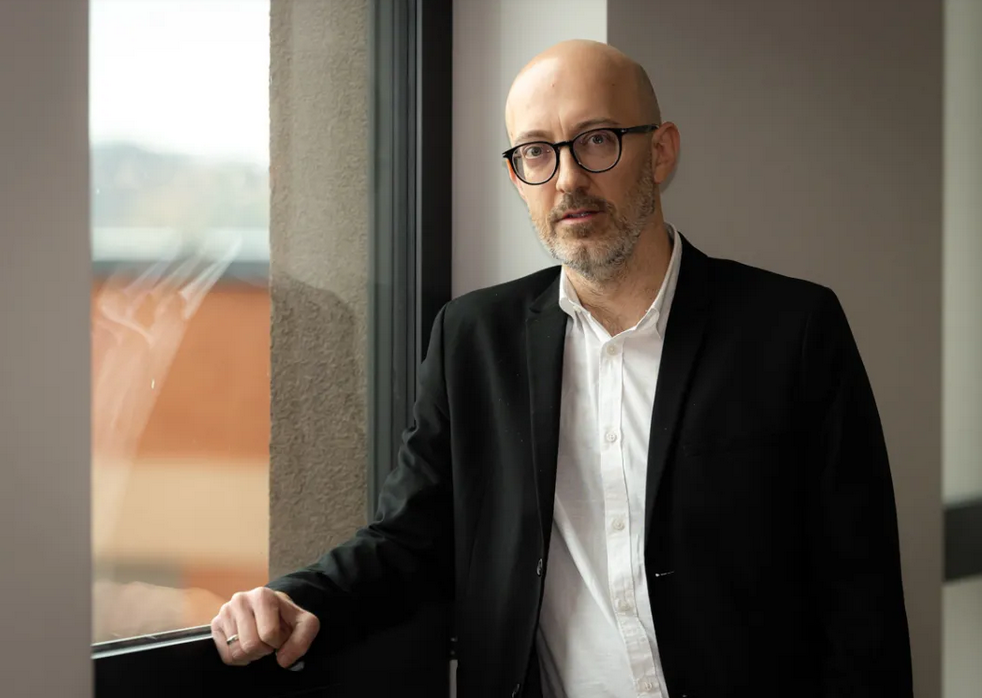
A recent interview with Dr. habil. Piotr Chlebowicz, Professor at the University of Warmia and Mazury, has been published on the University’s website, entitled “Acts of sabotage are a new level of aggression in hybrid warfare.”
Below is an excerpt from the interview:
“The acts of sabotage that have occurred in Poland in recent days show that classical intelligence activities—focused on gathering information—are transforming into hybrid operations. Prof. Piotr Chlebowicz from the Faculty of Law and Administration at UWM, author of the innovative academic monograph ‘Espionage. A Criminological Study’, discusses the thin boundary between espionage and terrorism.”
Where did your interest in espionage come from?
There were essentially two things that pushed me to study espionage from a scientific perspective. The first was the Polish TV series Pogranicze w ogniu (“Borderland in Flames”), broadcast during my high school years. It excellently depicted the realities of intelligence and counterintelligence work in the Second Polish Republic. When I conducted a private investigation into the storyline of the series, I discovered that some elements were taken from authentic cases.
The second motivating factor was the work of the writer John le Carré, who authored outstanding books on espionage and related matters. All of this made me think that perhaps one day it would be worth translating these interests into academic research.
You also write in the introduction that espionage remains a “blank spot” on the criminological research map both in Poland and Europe. Why is that?
Acts involving participation in a foreign intelligence service—obtaining, gathering, or transferring information about another state—are criminalized in virtually all legal systems. In criminal law doctrine, they are typically classified as political crimes. Espionage, understood as a threat to state security, is penalized in Article 130 of the Polish Criminal Code, and therefore is of interest to criminology. Yet it has rarely been the subject of scholarly research. I concluded that this was precisely why the topic should be explored.
What makes espionage such a rarely studied phenomenon?
Issues related to espionage generally belong to the “world of shadows.” For many years, even though espionage existed in practice, it did not exist officially. The number of espionage trials was minimal, and all of them were classified. One of my greatest challenges was to create a methodology that would allow me to write the book without requiring a security clearance. I wanted to base the book strictly on open sources so that it would be accessible to everyone, instead of becoming a training manual or an analytical report for intelligence services or the government. It was meant to be an academic work open to evaluation—and thankfully, this goal was achieved.
Why did you choose the timeframe 1990–2022?
I was interested in actions directed against a free and democratic Poland. During the writing process, it became clear that espionage has been undergoing significant transformations in connection with Russia’s efforts to rebuild its Soviet-era sphere of influence. However, espionage is a natural element of international relations—states gather information about other states in various ways. Russia is currently our greatest adversary, but other states also spy—for example Germany, Ukraine, or the United States, as I describe in the book.
The biggest problem now, however, is that Russian and Belarusian intelligence operations have evolved from classical information gathering into attempts to shape reality, exert influence, and ultimately conduct hybrid operations including sabotage and diversionary attacks. This is where the boundary between espionage and terrorism lies. Classical espionage still exists, but we now observe violent acts inspired by intelligence services—an extremely dangerous trend.
In the book, I included a forecast predicting the escalation of violence inspired by the Russian Federation. One can observe a shift in tactics toward the use of so-called proxy agents—criminals recruited to carry out sabotage and diversion. Unfortunately, current developments point to the accuracy of this prediction.
Recent events seem to confirm this forecast. There were acts of sabotage reported on railway lines in the Masovian and Lublin voivodeships. Tomasz Siemoniak stated on Tuesday (18 November) that the likelihood of foreign services being behind these actions is very high. How would you interpret this?
I will try, though I must emphasise that I rely solely on media reports. If explosives were used, the perpetrators likely had military experience or training. This may indicate that proxy agents are no longer sufficient. Someone evidently concluded that previous actions were not having a deterrent effect, so they escalated to another level. Attempting to blow up or derail a train marks a new degree of aggression in hybrid warfare—one that is now transforming into state terrorism. Civilians are also becoming targets. We can clearly see the evolution: from distributing leaflets, to arson, to bomb attacks.
Your remark that “espionage may be perceived as a tool for preparing for armed conflict” sounds alarming.
It is true, and that is why countering espionage should be seen as an element of safeguarding national security—but this is only possible if we possess adequate knowledge. I hope that this book will be useful, for example, to young officers being trained in intelligence and counterintelligence schools. In Western countries, intelligence studies are an established academic field where various aspects of intelligence operations—part of government administration—are analysed from legal, criminological, and political perspectives.
One chapter of the book includes case studies of Belarusian espionage (Olga Sołomenik), Russian espionage (Marek Zieliński), German espionage (Ryszard Tomaszek, Piotr Hoffmann), and also the case of Russian spy Stanisław Sz. Could you discuss one of these cases?
Criminology focuses on specific facts and seeks to generalize them. I was interested in empirical work, not in theories that would contribute little to understanding the phenomenon.
Marek Zieliński was an officer of the Security Service (SB) who resigned in free Poland but attempted to spy on the newly formed staff of the Office for State Protection (UOP) and the Ministry of Interior. His case was thoroughly documented and declassified by the Institute of National Remembrance, which allowed me to reconstruct the entire history.
The case of Stanisław Sz. received significant media attention. Here, I had access to partially declassified court decisions from both first and second instance courts. By connecting, analyzing, and deducing information, I was able to reconstruct his activities.
That part of your research must have been fascinating.
At times, I engaged in purely investigative work. Supplementary sources included interviews with former UOP officers, some of whom confirmed details I had found in documents. I recall visiting the District Court in Białystok, which granted me access to two volumes of case files. Based on them, I attempted to reconstruct the profile of a woman who was a spy and tried to recruit ABW officers in Białystok. I had a wanted notice, a photo, journalistic investigations, and excerpts from court rulings. When combined with publicly available reports describing Belarusian intelligence methods, I was able to reconstruct the modus operandi in this case.
Can we say that espionage is a game of obtaining as much information as possible while ensuring that no one finds out?
Espionage is, in my view, a perfect metaphor for a game—and this on two levels. On the one hand, states are constantly engaged in a strategic game using intelligence services. On the other hand, intelligence services themselves operate through agents—individuals recruited by case officers—and here, too, we observe a game built on deception and manipulation. Counterintelligence tries to identify and turn recruited agents. This is classic tradecraft. James Angleton, CIA counterintelligence chief, described their professional environment as “a wilderness of mirrors,” which perfectly captures the essence of this work—one can never be certain what is true and what is an illusion.
So are intelligence and counterintelligence officers the players?
I wonder to what extent they are players—and to what extent they are pawns. I do not know. I think the answer to this question is hidden in intelligence archives or in the memories of policymakers—although, one may reasonably assume that even archival records may not fully reflect reality.